
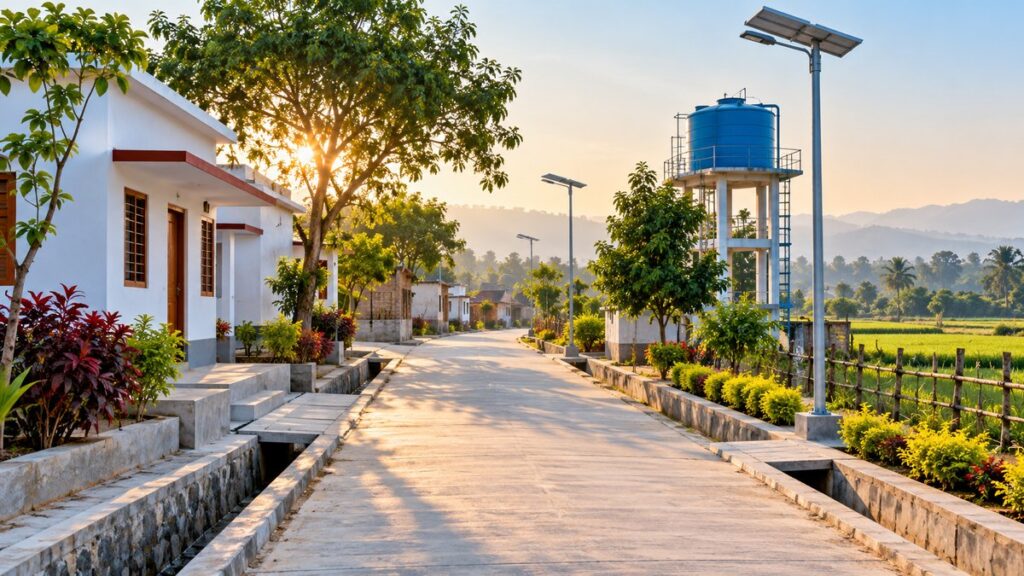
The PM AJAY Yojana 2026 initiative is an important welfare framework. Pradhan Mantri Anusuchit Jaati Abhyuday Yojana (PM-AJAY) is a Central Government scheme designed to support the socio-economic and educational empowerment of Scheduled Caste communities. Implemented by the Ministry of Social Justice and Empowerment, it focuses on village infrastructure, livelihood opportunities, skill development, education and access to basic services.
📌 Table of Contents
- PM-AJAY at a Glance
- Component 1: Development of Villages into Adarsh Grams
- Component 2: Grants-in-Aid for Livelihoods and Skills
- Component 3: Hostels for Scheduled Caste Students
- How PM-AJAY Money Is Divided
- The New PM-AJAY Mobile App and Portal: What Changes on the Ground?
- How Families, Students and Panchayats Can Engage with PM-AJAY
- Frequently Asked Questions About PM-AJAY
According to the latest information released by the Press Information Bureau (PIB) on 16 October 2026, 18,093 villages had been declared Adarsh Grams as of 8 September 2026. The scheme also supports socio-economic projects at the State and District levels and the construction and repair of student hostels. Understanding these three components helps families, students and village representatives identify the areas in which the scheme may support community development.
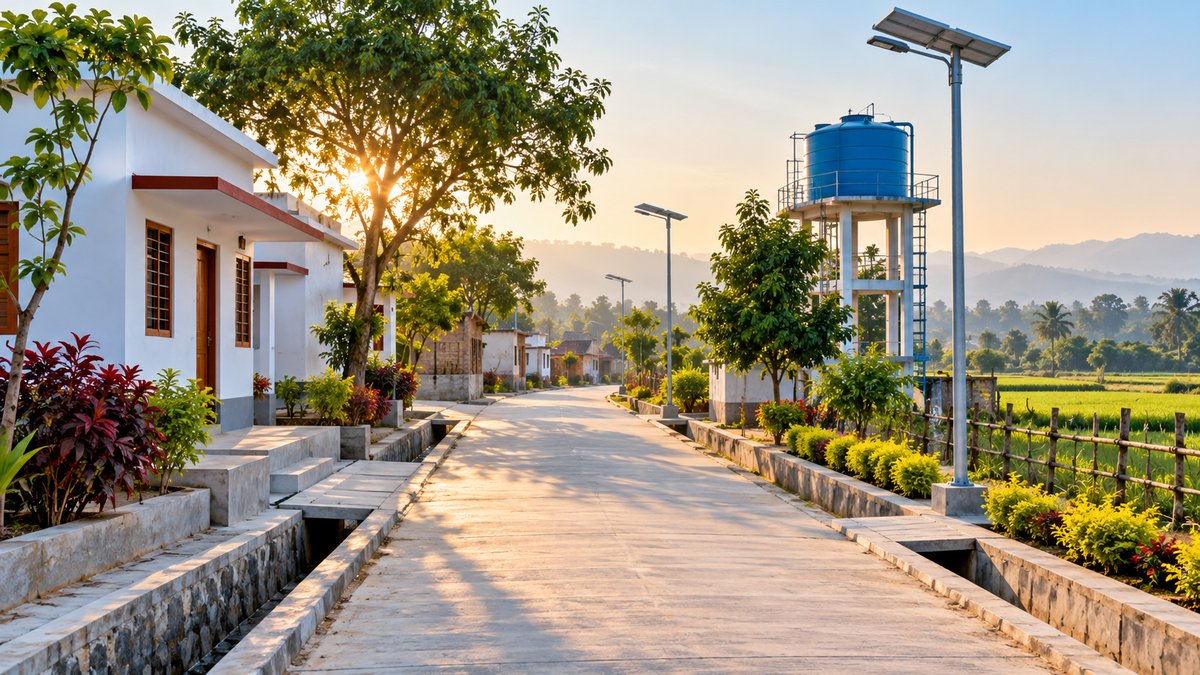
PM AJAY Yojana 2026: Overview and Key Benefits
| Component | What It Funds | Latest Figure |
|---|---|---|
| Adarsh Gram development | Infrastructure improvements and gap-filling in Scheduled Caste-dominated villages. | 18,093 villages declared Adarsh Grams (as on 8 September 2026); over 47,200 villages covered. |
| Grants-in-Aid | Livelihood projects, skill development, related infrastructure and residential schools where required. | About ₹1,730 crore released directly to States from FY 2021-22 to FY 2025-26, supporting more than 2.5 lakh individual and group beneficiaries. |
| Hostels | Construction and repair of hostels to improve access to education for Scheduled Caste students. | 785 student hostels completed as of September 2026. |
Official source: PIB release on PM-AJAY progress, funding and digital initiatives, published on 16 October 2026.
Component 1: Development of Villages into Adarsh Grams
The Adarsh Gram component focuses on improving the living conditions of people in Scheduled Caste-dominated villages. Its central idea is to address critical gaps in infrastructure and essential services, improving basic services and the quality of life in these villages.
What Makes a Village an Adarsh Gram?
An Adarsh Gram is envisioned as a model village where people have access to basic services, the minimum needs of all sections of society are met, and disparities are reduced to a minimum.
Progress So Far
The figures released by PIB show the scale of work under this component:
- Over 47,200 villages covered: These villages collectively benefit more than 47.79 lakh citizens.
- 46,944 development works completed: These works contribute to addressing village infrastructure and service gaps.
- 27,032 Village Development Plans prepared: These plans provide a framework for identifying and organising village development priorities.
- 18,093 villages declared Adarsh Grams: This was the reported position as of 8 September 2026.
These are different milestones: a village being covered, a plan being prepared, a work being completed and a village being declared an Adarsh Gram are not the same thing.
Component 2: Grants-in-Aid for Livelihoods and Skills
The Grants-in-Aid component supports socio-economic projects planned at the State and District levels. It is intended to improve livelihood opportunities, strengthen skills and support related infrastructure for Scheduled Caste communities.
Unlike the Adarsh Gram component, which focuses on village development, this component can support projects designed around income generation, skill development and broader socio-economic improvement. It also supports residential schools wherever required to promote literacy and school enrolment among Scheduled Caste students.
The main areas of support include:
- Livelihood projects: Comprehensive projects intended to expand income-generating opportunities.
- Skill development: Opportunities to develop skills that can support livelihood activities.
- Related infrastructure: Facilities needed to support livelihood and skill-development projects.
- Village-level infrastructure: Projects that help improve socio-economic development indicators in Scheduled Caste-dominated villages.
- Residential education: Residential schools where required to encourage literacy and school enrolment.
How Much Funding Has Been Released?
From FY 2021-22 to FY 2025-26, about ₹1,730 crore was released directly to States under the Grants-in-Aid component. According to the PIB announcement, this support extended skilling and livelihood opportunities to more than 2.5 lakh individual and group beneficiaries.
People exploring other government livelihood initiatives may also read about the PM Vishwakarma Yojana. It is a separate scheme, so its arrangements should not be confused with PM-AJAY.
Component 3: Hostels for Scheduled Caste Students
Education is another important part of PM-AJAY. The hostel component supports the construction and repair of hostels for Scheduled Caste students, helping improve access to educational opportunities, particularly for students from rural and remote areas.
Latest Hostel Progress and Funding
- 785 hostels completed: This was the reported total as of September 2026.
- ₹61.46 crore allocated: Central assistance for FY 2026-27 for two hostel projects.
- 264 students to be accommodated: The two projects comprise one hostel for girls and one for boys.
- Maintenance assistance: The Government of India also provides central assistance for hostel maintenance.
This allocation supports the two hostel projects; it is not a payment made directly to students.
How PM-AJAY Money Is Divided
PM-AJAY is a 100% centrally funded scheme. States and Union Territories may supplement the central funding with resources of their own. The scheme’s funding framework sets out how the available funds may be allocated across its components.
| Funding Category | Allocation Rule | Purpose |
|---|---|---|
| Adarsh Gram gap-filling | Up to 50% | Addressing development gaps in selected Adarsh Gram villages. |
| Technical Support Groups and Project Implementation Units | Up to 5% | Setting up and operating these units at Central, State and District levels. |
| Hostel construction and repair | Up to 2% | Supporting hostel construction and repair, including Central Institutions. |
| Grants-in-Aid for State and District projects | The remainder | Funding socio-economic projects at State and District levels. |
The first three figures are ceilings (PIB says “up to”); the funds that remain are provided as Grants-in-Aid for District and State projects.
How Are Grants-in-Aid Allocations Decided?
Grants-in-Aid allocations take account of the Scheduled Caste population and the ratio of a State’s Scheduled Castes Sub Plan (SCSP) to its Annual Plan. These considerations help inform the distribution of support among States and Union Territories.
After infrastructure projects are completed, the State Governments or implementing agencies concerned are responsible for their maintenance and operation.
The New PM-AJAY Mobile App and Portal: What Changes on the Ground?
The PM-AJAY Mobile App and PM-AJAY Portal have been launched to move scheme administration away from paper-based workflows towards end-to-end digital processing in real time.
According to PIB, this technology-enabled approach is strengthening information access, monitoring and data-driven decision-making, and aims to improve coordination, transparency, accountability and efficiency in delivering welfare interventions.
The PIB release does not give a public web address for the portal or say that individuals can apply through it. For a specific concern, contact the relevant local office.
How Families, Students and Panchayats Can Engage with PM-AJAY
For Scheduled Caste Families
Families interested in local development or livelihood opportunities can speak to their gram panchayat, the district social welfare office or the State Scheduled Caste welfare department. They can ask about development priorities, ongoing projects, skill-development activities and livelihood initiatives in their area.
For Students and Parents
Students who need hostel accommodation should ask their school or the district social welfare office about hostel facilities, available seats and the authority that manages each hostel. The number of completed hostels does not mean a seat is available everywhere, so confirm locally.
For Gram Panchayats and Village Representatives
Village representatives can discuss local infrastructure gaps and development priorities with the relevant authorities. They can ask about Village Development Plans, the status of planned works and whether their village has been declared an Adarsh Gram.
Where a project has been completed, representatives can also ask which agency is responsible for its maintenance.
For People Exploring Other Government Support
Different government schemes address different needs. For example, readers can explore information about the National Social Assistance Programme (NSAP) or the e-Shram Card to understand other forms of government support. These initiatives are separate from PM-AJAY and have their own arrangements.
Frequently Asked Questions About PM-AJAY
What Is PM-AJAY?
Pradhan Mantri Anusuchit Jaati Abhyuday Yojana is implemented by the Ministry of Social Justice and Empowerment to advance the socio-economic and educational empowerment of Scheduled Caste communities through infrastructure, livelihoods, education and basic services.
How Many Villages Have Been Declared Adarsh Grams?
As of 8 September 2026, 18,093 villages had been declared Adarsh Grams. The scheme had covered over 47,200 villages, benefiting more than 47.79 lakh citizens.
Does PM-AJAY Support Livelihoods and Skill Development?
Yes. Its Grants-in-Aid component supports State and District projects involving livelihood opportunities, skill development, related infrastructure and residential schools where required. About ₹1,730 crore was released directly to States from FY 2021-22 to FY 2025-26, extending skilling and livelihood opportunities to more than 2.5 lakh individual and group beneficiaries.
How Many Student Hostels Have Been Completed?
As of September 2026, 785 student hostels had been completed under PM-AJAY. For FY 2026-27, ₹61.46 crore in central assistance was allocated for two hostel projects, one for girls and one for boys, accommodating 264 students.
Where Can Families Get Information About Local Projects or Hostel Seats?
Families and village representatives can approach the gram panchayat, district social welfare office or State Scheduled Caste welfare department. Students seeking hostel accommodation should ask their school or the district office about hostel facilities and available seats.
Disclaimer
This article is based on information published by the Press Information Bureau on 16 October 2026. Projects are implemented through the relevant authorities, and local facilities, progress and arrangements may vary by location. Jansarkariyojna.com is an independent information website and is not affiliated with any government department.
Eligibility Criteria for PM AJAY Yojana 2026
To qualify for village-level works, hostel admissions, and livelihood grants under the PM AJAY Yojana 2026, beneficiaries and target habitations must fulfill specific central criteria:
- Adarsh Gram Habitations: Villages where the Scheduled Caste (SC) population accounts for 40% or more (formerly 50%) of the total village demographic are prioritized for integrated development.
- Income Ceiling for Livelihood Projects: Families from SC communities with an annual household income of up to ₹2.50 Lakh are eligible for individual and self-help group skill grants.
- Hostel Accommodation: SC students studying in secondary, higher secondary, and college institutions who do not have suitable residential facilities within a 5 km radius of their school can apply for hostel admissions.
Mandatory Documents Required
Applicants and local beneficiary groups must keep the following documents verified at their District Welfare Office or Gram Panchayat:
- Aadhaar Card of the applicant or student
- Valid Scheduled Caste (SC) Community Certificate issued by a competent revenue officer (Tehsildar/SDM)
- Income Certificate certifying annual family income under ₹2.50 Lakh
- Proof of Residence / White Ration Card / Voter ID
- Bank account details (Aadhaar-seeded bank account for DBT grant transfers)
- Bonafide student admission receipt (for PM AJAY hostel accommodation claims)
Step-by-Step How to Apply for PM AJAY Yojana 2026
Applying for benefits under PM AJAY Yojana 2026 involves structured verification across village, block, and district administration levels:
- Gram Panchayat Livelihood Proposal: Individual beneficiaries and self-help groups (SHGs) submit skill training and micro-enterprise proposals to the Gram Sabha or Panchayat Secretary during regular village planning rounds.
- Hostel Admission Submission: Students seeking residential accommodation in newly constructed Babu Jagjivan Ram Chhatrawas hostels must apply directly through their institution’s principal or the District Social Welfare Officer (DSWO).
- Online Project Monitoring Portal: State nodal departments and district administrators register approved projects on the central PM-AJAY portal for direct central grant disbursal.
- Verification & Inspection: District monitoring committees inspect the infrastructure development works and approve milestone-based funding.
For authentic application submissions and verified circulars, visit the official departmental portal at Ministry of Social Justice and Empowerment (socialjustice.gov.in).