
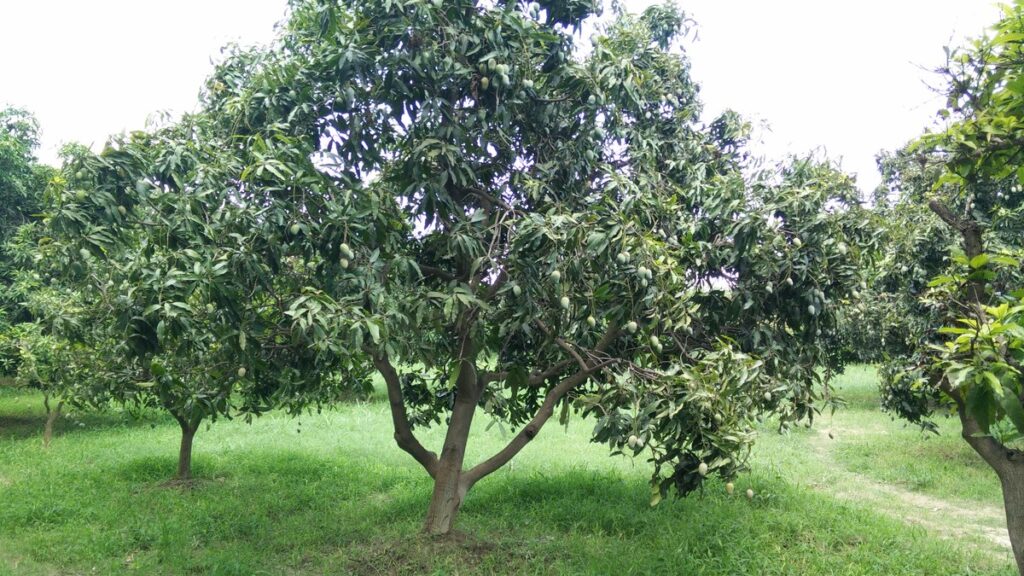
Introduction to Birsa Harit Gram Yojana (BHGY)
Large tracts of undulated, barren upland (tanr land) across rural Jharkhand remain uncultivated due to lack of irrigation and soil erosion, limiting agricultural incomes for small tribal farmers. To turn unproductive fallow plots into profitable commercial fruit orchards while providing guaranteed daily wage employment, the Rural Development Department, Government of Jharkhand, implements the visionary Birsa Harit Gram Yojana (BHGY).
Executed in convergence with the Mahatma Gandhi National Rural Employment Guarantee Act (MGNREGA), the scheme provides comprehensive assistance to convert up to 1 acre of barren land into a fruit-bearing orchard (primarily commercial mango, guava, and lemon varieties). Participating farming families receive 100% free high-yield saplings, organic manure, bio-fencing materials, drip irrigation logistics, and guaranteed MGNREGA daily wages for plant caretaking for five continuous years.
Program Overview and Operational Architecture
| Component | Operational Provision |
|---|---|
| Scheme Name | Birsa Harit Gram Yojana (BHGY) |
| Nodal Department | Rural Development Department, Government of Jharkhand |
| Land Allocation Ceiling | 0.5 to 1.0 acre of fallow/upland per participating household |
| Focus Fruit Crops | High-yield Mango (Amrapali, Mallika), Guava (Allahabad Safeda, VNR Bihi), Lemon |
| Wage Support Duration | 5 continuous years of guaranteed MGNREGA wages for pit digging, planting, and plant maintenance |
| Inter-cropping Support | Promotion of pulses, vegetables, and medicinal plants between fruit tree rows |
| Official Portal | rural.jharkhand.gov.in / nrega.nic.in |
Five-Year Staged Lifecycle Support Model
The program supports the farmer through every stage until the orchard achieves full commercial maturity:
- Year 1 (Land Preparation & Plantation): Excavation of planting pits, organic manure application, sapling planting, tree guard bio-fencing, and watering. The farmer family earns guaranteed daily MGNREGA wages throughout this phase.
- Years 2 & 3 (Plant Nurturing & Pruning): Regular weeding, insect control, tree training, pruning, and basin maintenance supported by regular MGNREGA caretaking wages.
- Inter-cropping Revenues: Farmers are trained to grow seasonal vegetables (tomatoes, chilies, beans) and pulses between tree rows, generating immediate income while the fruit trees mature.
- Years 4 & 5 (Commercial Fruiting & Market Linkages): Trees begin yielding commercial harvests. The Jharkhand State Livelihood Promotion Society (JSLPS) connects farmers with institutional retail aggregators, creating sustainable annual household revenues of ₹50,000 to ₹1,00,000 per acre.
Eligibility Criteria
Farmers in Jharkhand qualify for the scheme under the following parameters:
- The applicant must be a permanent resident of rural Jharkhand holding an active MGNREGA Job Card.
- The farmer must possess undisputed ownership or community possession of at least 0.5 to 1.0 acre of upland/fallow land.
- Priority is strictly reserved for small and marginal farmers, Scheduled Tribe (ST), Scheduled Caste (SC), primitive tribal groups (PVTG), and women-headed households.
- The participating family must commit to providing daily manual labor for sapling caretaking and watering.
Documents Required for Application
Applicants must assemble the following records:
- Active MGNREGA Job Card of the applicant and family members.
- Aadhaar Card of the primary landholder.
- Land Revenue Record (Khatiyan / Jamabandi / Forest Rights RoFR Title or Gram Sabha resolution).
- Bank Passbook copy linked with Aadhaar and MGNREGA wage payments.
- Recent passport-size photographs.
Step-by-Step Enrollment and Implementation Workflow
The onboarding journey is coordinated through the Gram Sabha:
- Gram Sabha Selection: The annual list of participating plots and farmers is approved during the special pre-monsoon Gram Sabha meeting in each village.
- Technical Sanction: The MGNREGA Junior Engineer and Block Programme Officer (BPO) prepare the technical site estimate and issue work codes.
- Pit Digging & Input Supply: Pit digging commences prior to monsoons. The department supplies certified grafted saplings and organic inputs through authorized nurseries.
- Planting & Geo-Tagging: Saplings are planted during the monsoon season. Every orchard is geo-tagged on the Bhuvan portal.
- Weekly Wage Crediting: Caretaking wages are calculated on electronic muster rolls and deposited weekly straight into the farmer’s bank account via DBT.
Frequently Asked Questions (FAQs)
1. Can farmers without individual land titles participate?
Yes. Tribal farmers holding Forest Rights Act (RoFR) pattas or community fallow land allocated by the Gram Sabha are fully eligible to establish fruit orchards.
2. Who provides the saplings and fertilizers?
Certified grafted saplings, organic bio-fertilizers, and fencing materials are supplied 100% free of charge through the Rural Development Department and empanelled horticulture nurseries.
3. How much annual income can a mature 1-acre mango orchard generate?
A fully matured 1-acre orchard comprising 100 high-yield mango trees typically generates between ₹75,000 and ₹1,50,000 in net annual revenue for the farming household.
Disclaimer: JanSarkariYojna.com is an independent educational and public information portal. We are not affiliated with the Government of Jharkhand. Beneficiaries must verify all official notices and administrative criteria on the official state portal at rural.jharkhand.gov.in.