
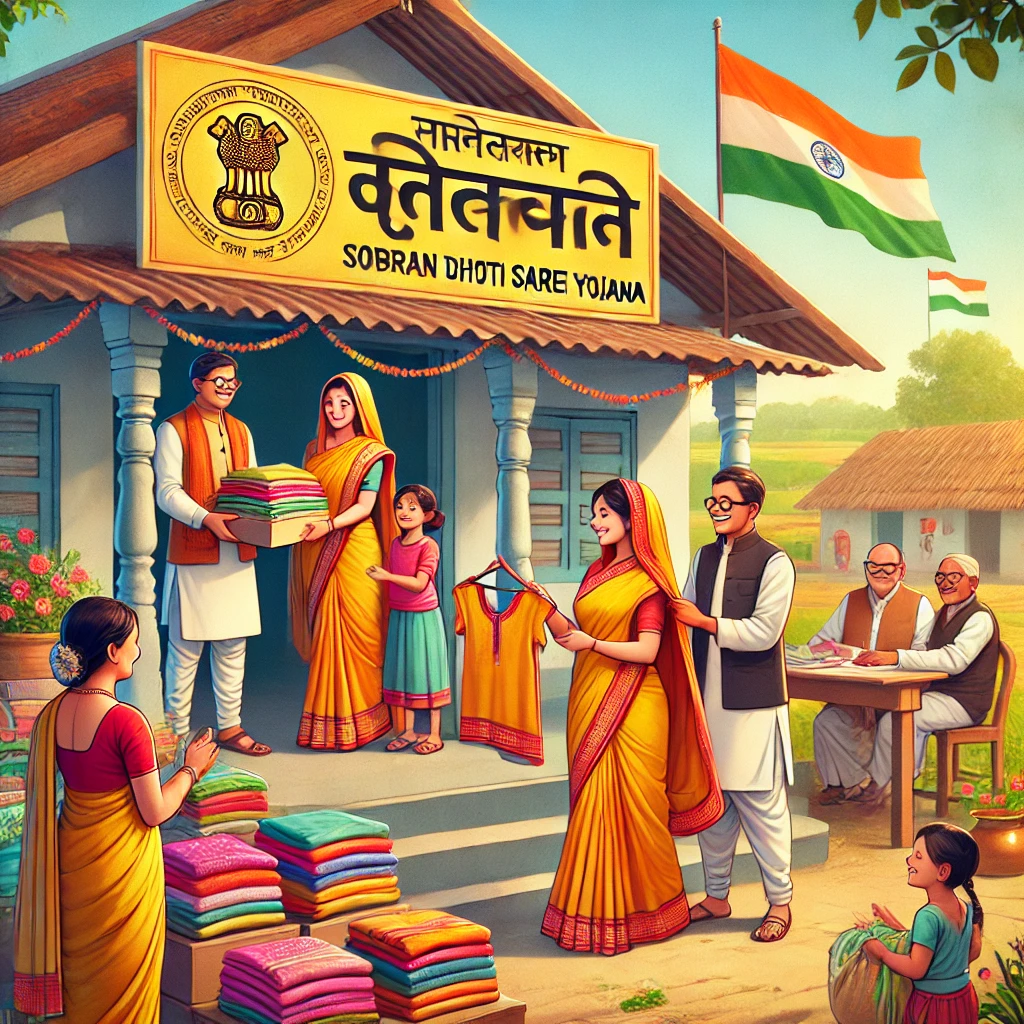
Introduction to Sona Sobran Dhoti Saree Yojana
Clothing is an essential human necessity vital for personal dignity, cultural identity, and physical protection. For impoverished and tribal families surviving on subsistence agricultural wages, purchasing new clothes during festivals and changing seasons often represents a burdensome financial strain. To address this fundamental need, the Food, Public Distribution and Consumer Affairs Department, Government of Jharkhand, implements the popular Sona Sobran Dhoti Saree Yojana.
Named in honor of revered tribal martyrs Sona and Sobran Santhal, this landmark public distribution program provides one standard quality dhoti or lungi (for men) and one saree (for women) twice a year at a highly subsidized price of just ₹10 each. Distributed through the state’s vast network of Fair Price Shops (PDS ration dealers), the scheme benefits over 58 lakh low-income families across Jharkhand.
Program Overview and Distribution Architecture
| Component | Policy Provision |
|---|---|
| Scheme Name | Sona Sobran Dhoti Saree Lungi Yojana |
| Nodal Department | Food, Public Distribution and Consumer Affairs Department, Jharkhand |
| Subsidized Rate | ₹10 per piece (₹10 for Dhoti/Lungi, ₹10 for Saree) |
| Annual Entitlement | Distributed twice every calendar year (First phase: June-July; Second phase: December-January) |
| Distribution Channel | Public Distribution System (PDS) Fair Price Dealers / Ration Shops |
| Eligible Population | All NFSA Antyodaya (Yellow), Priority Household (Pink), and Green Ration Cardholders |
| Official Portal | aahar.jharkhand.gov.in |
Quality Specifications of Distributed Garments
The state government enforces strict quality parameters for all garments distributed under the scheme:
- Sarees: Full-length 5.5-meter cotton/polyester blended sarees with colorful traditional prints, woven borders, and accompanying blouse pieces.
- Dhotis: Standard 4.0-meter durable cotton dhotis suitable for daily agricultural and cultural wear.
- Lungis: 2.0-meter woven cotton lungis provided as an alternative option for male beneficiaries.
- All garment consignments undergo quality inspections and testing at certified textile testing laboratories prior to district dispatch.
Eligibility Criteria
Families in Jharkhand qualify for the subsidized clothing benefit under the following conditions:
- The family must be permanent residents of Jharkhand.
- The household must hold a valid Antyodaya Anna Yojana (AAY – Yellow), Priority Household (PHH – Pink), or Jharkhand State Food Security Scheme (Green) ration card.
- The ration card must be active in the state’s centralized digitized PDS database (Aahar portal).
- Family members must authenticate their biometric fingerprints on the electronic Point of Sale (e-PoS) machine at their mapped Fair Price Shop.
Documents Required for Distribution
Beneficiaries require minimal paperwork at the ration shop:
- Original Digital Ration Card.
- Aadhaar Card of the family head or any enrolled family member.
- Nominal cash payment of ₹10 per garment (total ₹20 for one pair).
Step-by-Step Collection Procedure at PDS Shops
Collecting subsidized clothing is integrated with regular monthly grain distribution:
- Notification of Distribution Phase: The District Supply Officer (DSO) notifies the commencement of the bi-annual distribution phase.
- Visit Local Fair Price Shop: The cardholder visits their mapped PDS ration dealer during notified distribution days.
- Biometric Authentication on e-PoS: The dealer selects the ‘Dhoti-Saree Scheme’ tab on the electronic e-PoS device and authenticates the beneficiary’s fingerprint.
- Payment & Garment Receipt: The cardholder pays ₹10 for the saree and ₹10 for the dhoti/lungi, collects the printed e-PoS receipt, and receives the packaged garments.
Frequently Asked Questions (FAQs)
1. Can a male beneficiary collect a lungi instead of a dhoti?
Yes. The scheme provides beneficiaries the option to choose either a traditional dhoti or a comfortable lungi along with the saree.
2. How many times a year can a family receive subsidized clothes?
Eligible families can purchase one set of garments twice every year—typically aligned with major cultural festivals such as Karma/Durga Puja and Sohrai/Tusu festivals.
3. What should a cardholder do if a dealer charges more than ₹10 per garment?
The government price is strictly fixed at ₹10 per piece. If any dealer overcharges or refuses distribution, complaints can be lodged on the state food toll-free helpline (1800-3456-598) or with the local Block Supply Officer (BSO).
Disclaimer: JanSarkariYojna.com is an independent educational and public information portal. We are not affiliated with the Government of Jharkhand. Beneficiaries must verify all official notices and administrative criteria on the official state portal at aahar.jharkhand.gov.in.