


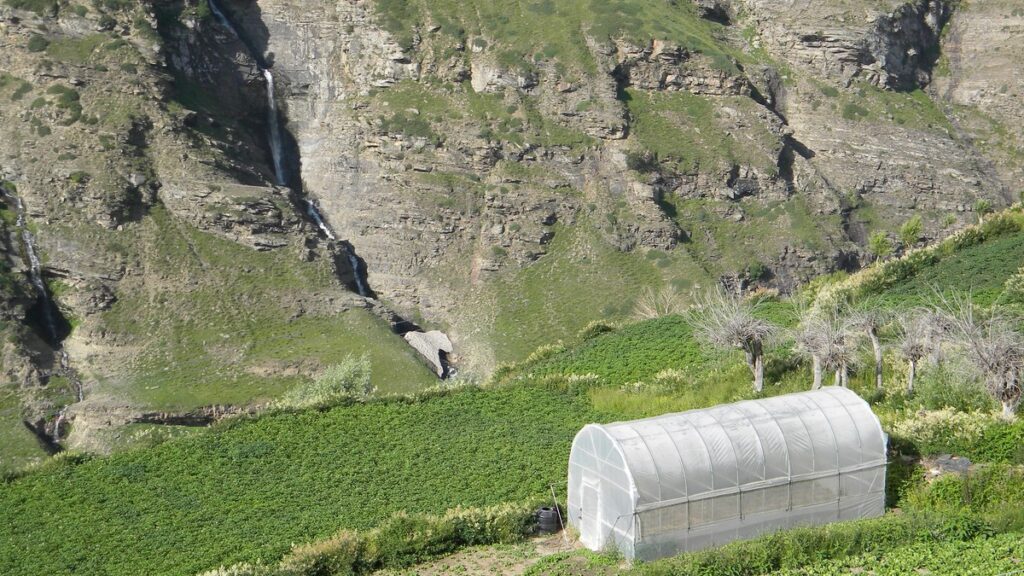
Introduction to Mukhyamantri Khet Sanrakshan Yojana
Crop raiding by wild animals—including wild boars, blue bulls (nilgai), sambar deer, and stray monkeys—represents one of the most severe threats to agricultural viability across Himachal Pradesh, driving thousands of farmers to abandon fertile terraced lands. To safeguard standing crops humanely and protect farmer livelihoods, the Department of Agriculture, Government of Himachal Pradesh, implements the highly effective Mukhyamantri Khet Sanrakshan Yojana.
Under this popular initiative, the state government provides massive subsidies ranging from 80% to 85% for the installation of solar-powered composite fencing and barbed wire/chain-link fencing around agricultural fields. The energized solar fences deliver a harmless, non-lethal pulsating electric shock that effectively deters wild animals from entering fields without causing injury, providing 24/7 crop security.
Program Overview and Subsidy Architecture
| Fencing Category | Target Beneficiary Model | Government Subsidy Rate | Farmer Contribution |
|---|---|---|---|
| Individual Solar Fencing | Individual farmer securing their personal agricultural holding | 80% Government Subsidy | 20% Farmer Share |
| Community / Group Solar Fencing | Group of 3 or more neighboring farmers (minimum 35 running meters/farmer) | 85% Government Subsidy | 15% Farmer Share |
| Composite / Interlink Chain-link Fencing | Heavy-duty fencing with solar energizer + wire mesh | 70% Government Subsidy | 30% Farmer Share |
| Eligible Terrain | Agricultural and horticultural holdings across all 12 districts | Non-lethal pulsed energizer | Certified ISI standards |
| Official Portal | hpagrisnet.gov.in | Department of Agriculture, HP | Direct dealer installation |
How Solar Energized Fencing Operates
The solar fencing systems installed under the scheme are technologically sophisticated and completely safe:
- Non-Lethal High-Voltage Pulse: A solar photovoltaic panel charges a 12V battery connected to a precision energizer. The energizer pulses a short, sharp high-voltage electric shock (typically lasting a fraction of a millisecond) along fence wires.
- Humane Animal Deterrence: When a wild animal touches the fence, it receives an uncomfortable shock that psychological trains it to avoid the perimeter, while posing zero risk of mortality to animals or humans.
- Integrated Alarm System: In the event of a wire break or persistent perimeter breach, the system triggers a loud audio-visual alarm that alerts nearby farmers.
Eligibility Criteria
Farmers in Himachal Pradesh qualify for the fencing subsidy under the following conditions:
- The applicant must be a resident cultivator of Himachal Pradesh holding verified agricultural land (recorded in digitized Jamabandi / revenue extracts).
- Individual farmers, groups of neighboring cultivators, registered farmer clubs, and Primary Agricultural Cooperative Societies are eligible.
- The agricultural land must be actively cultivated with agricultural or horticultural crops vulnerable to wildlife depredation.
- The farmer must contribute their mandatory 15% or 20% margin share to the authorized equipment manufacturer/dealer.
- The farmer must not have availed a government fencing subsidy for the same parcel of land during the previous seven years.
Documents Required for Application
Applicants must assemble the following verified records:
- Jamabandi / Tatima revenue land records from the local Patwari indicating land parcel boundaries.
- Bonafide Himachali Certificate and Aadhaar Card.
- Group agreement resolution (for community fencing applications claiming 85% subsidy).
- Bank Passbook copy showing active account and IFSC code.
- Quotation and technical layout design from an empanelled solar fencing manufacturer.
Step-by-Step Application and Installation Procedure
Applying for the fencing subsidy follows a standardized administrative workflow:
- Obtain Application Form: Download the application form from
hpagrisnet.gov.inor collect it from the office of the Agriculture Development Officer (ADO) / Block Subject Matter Specialist (SMS). - Field Feasibility Survey: The ADO visits the farm site, measures the running perimeter (in meters), and verifies land boundary suitability.
- Selection of Empanelled Vendor: The farmer selects an authorized vendor from the approved panel of state-certified solar fencing equipment manufacturers.
- Sanction Order Issuance: The Deputy Director of Agriculture (DDA) issues the formal Administrative Sanction Order.
- Installation & Subsidy Settlement: The vendor completes physical installation. Department engineers conduct a joint technical inspection, and the 80% to 85% subsidy is settled directly with the vendor upon farmer satisfaction sign-off.
Frequently Asked Questions (FAQs)
1. Why is the subsidy higher for group applications?
Group installations enclose larger contiguous agricultural landscapes more economically, minimizing boundary perimeters and creating unified, uninterrupted buffer zones against wild animal corridors.
2. Does the fence function during cloudy winter months?
Yes. The high-capacity deep-cycle batteries provided under scheme specifications maintain up to five days of continuous autonomy without direct sunlight.
3. What maintenance support is provided after installation?
Empanelled manufacturers provide a mandatory warranty and free maintenance service period covering solar modules, batteries, and energizers.
Disclaimer: JanSarkariYojna.com is an independent educational and public information portal. We are not affiliated with the Government of Himachal Pradesh. Beneficiaries must verify all official notices and administrative criteria on the official state portal at hpagrisnet.gov.in.